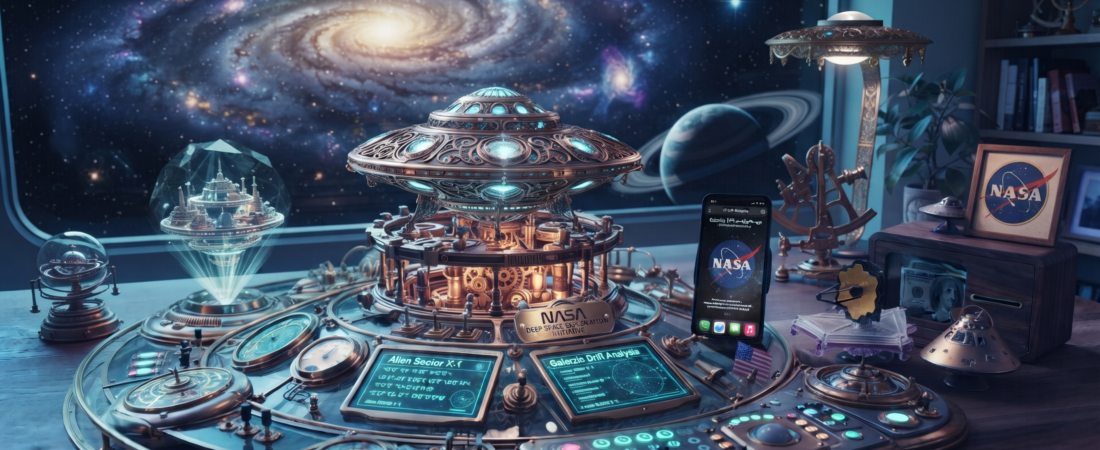
The quest to answer humanity’s oldest question—Are we alone in the universe?—has entered an unprecedented era of scientific discovery. With advanced space telescopes and multi-agency research initiatives based in the United States, space agencies are aggressively expanding their search parameters:
- James Webb Space Telescope (JWST) Breakthroughs:
- JWST is continuously analyzing the atmospheres of distant exoplanets for biosignatures, searching for chemical indicators like methane and carbon dioxide that could hint at biological activity.
- The Search for Technosignatures:
- Beyond organic biosignatures, modern astronomers are scanning deep space for technosignatures—artificial signals, radio waves, or megastructure transit anomalies indicating intelligent alien civilizations.
- Mars Sample Return and Ancient Habitability:
- Ongoing analysis of Martian soil and rock samples collected by NASA rovers aims to uncover fossilized microbial life from billions of years ago when Mars had liquid water and a thicker atmosphere.
- Ocean Worlds in Our Solar System:
- Moons like Europa (orbiting Jupiter) and Enceladus (orbiting Saturn) feature massive subsurface oceans protected beneath thick layers of ice, making them prime targets for upcoming robotic exploration missions.
- Private Aerospace and Deep Space Collaboration:
- The synergy between NASA and commercial aerospace innovators in the US is rapidly cutting down the timeline for deep space probes, orbital observatories, and interplanetary travel technologies.